Converting both sides multiplies the factor twice
One inch is 2.54cm. One in² is therefore 2.54cm × 2.54cm, or 6.4516cm². NIST’s area conversion table gives the same factor. Multiplying an area by only the length factor 2.54 gives the wrong conversion.
1 in² = (2.54 × 2.54) cm² = 6.4516 cm²
24 in² = (24 × 6.4516) cm² = 154.8384 cm²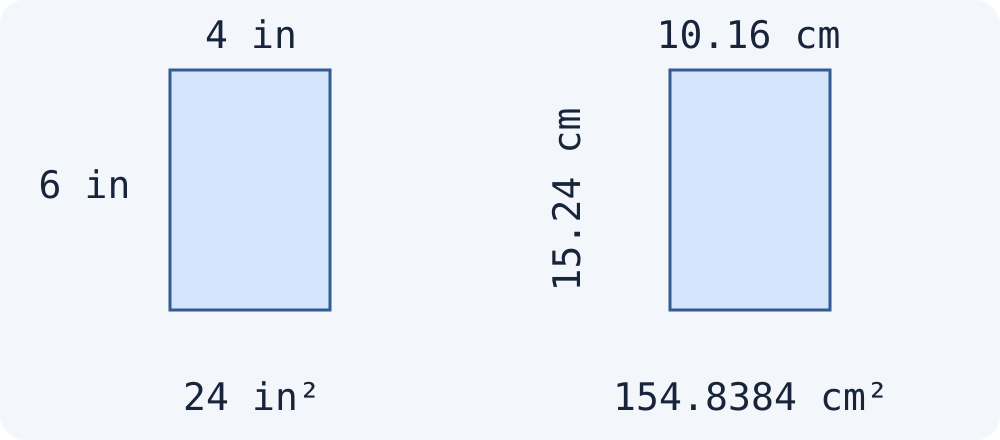
Convert each side in Moyoutil
Choose inches and cm under Length in the unit converter. Converting 4 and 6 separately gives 10.16 and 15.24. Multiplying them gives an area of 154.8384cm². The code below was run with the actual convertUnit function; the final number is displayed to four decimal places. Avoid rounding intermediate values early.
const w = convertUnit("length", 4, "inch", "cm");
const h = convertUnit("length", 6, "inch", "cm");
(w * h).toFixed(4) // "154.8384"
The tool currently supports length, weight, temperature, and volume; it has no area input mode. Do not enter 24in² as 24 inches in Length. They are different quantities. A rectangle with a zero-length side has zero area; geometric side lengths here are nonnegative.
Frequently Asked Questions
Is the factor between cm² and mm² also 10?
No. 1cm × 1cm equals 10mm × 10mm, so 1cm² equals 100mm². NIST’s area unit table confirms this.